Racing Three Ways: Thoroughbreds, Greyhounds, and Virtual Tracks — Which Bet Actually Gives Aussies the Best Shot?
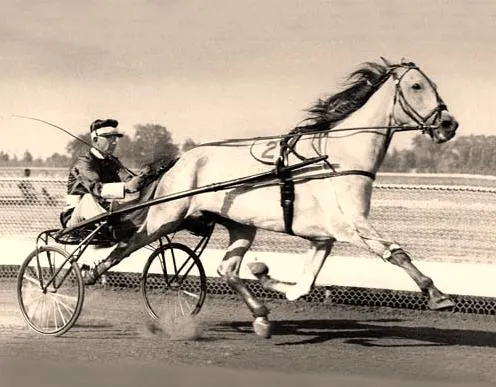
Photo: Unknown authorUnknown author, Public domain, via Wikimedia Commons
For Australian punters, racing is practically a birthright. From the Melbourne Cup stopping a nation to Saturday afternoon greyhounds at Wentworth Park, Aussies have been betting on things that run fast since before Federation. Add virtual sports to the mix — the algorithm-driven races that now populate online platforms around the clock — and you've got three distinctly different betting disciplines that look similar on the surface but operate on very different mathematical foundations.
So let's actually break it down. House edge. Liquidity. Volatility. Payout structures. If you're going to put money on a race, you should know what you're really dealing with.
Thoroughbred Racing: The Premium Product With Premium Margins
Horse racing is the flagship of Australian wagering. The TAB, major bookmakers, and online platforms all treat thoroughbred racing as their primary product, and the market depth reflects that. On a major race like the Cox Plate or a Group 1 metropolitan meeting, you'll find hundreds of thousands of dollars flowing through win and place markets, which has a meaningful impact on the quality of the odds you receive.
The house edge reality: Thoroughbred racing in Australia typically operates with a totalisator (tote) takeout rate of around 14–17% on win markets and higher on exotics. Fixed-odds markets through corporate bookmakers can be more competitive on the top runners in high-profile races, but margins on mid-field selections and lesser meetings often stretch to 20% and beyond when you calculate the overround.
For context: the overround is the bookmaker's built-in margin. Add up the implied probabilities of every runner's odds and you'll get a number greater than 100%. The excess above 100% is the margin. On a competitive metropolitan thoroughbred race, you might see an overround of 110–115%. On a country maiden with 12 runners and minimal liquidity, that figure can push past 130%.
Where the value hides: The depth of the thoroughbred market means there are also genuine pricing inefficiencies that skilled form students can exploit. Trainer and jockey patterns, track bias, wet track form, barrier statistics — the volume of available data is enormous. Punters who genuinely invest time in form analysis have more opportunity to find value here than in almost any other racing vertical.
A real-world scenario: A $50 win bet on a $3.50 fixed-odds favourite in a Saturday metropolitan race. If the bet wins, you collect $175 total ($125 profit). The key question is whether that $3.50 accurately reflects the horse's true probability. If you believe it should be $3.00, the bookmaker has actually priced in your favour. If it should be $4.50, you're paying a premium.
Greyhound Racing: Lower Margins, Higher Variance, and a Punter's Secret Weapon
Greyhound racing doesn't get the same cultural cachet as thoroughbreds, but among serious value-hunting punters, it has a genuinely devoted following — and there are mathematical reasons for that.
The house edge reality: Greyhound markets, particularly at tier-one tracks like Wentworth Park, The Meadows, and Sandown Park, often carry lower overrounds than comparable thoroughbred races. An eight-dog field with transparent early speed and sectional data can price tighter than a 14-runner horse race with dozens of variables. Tote takeout on greyhounds typically sits around 14–15% on win markets in Australia.
The smaller fields are the key factor. Eight runners versus 14–20 thoroughbreds means each selection represents a larger slice of the probability pool, which tends to produce tighter, more efficient markets on competitive races.
The volatility caveat: Greyhound racing is genuinely high-variance. Box draws matter enormously. Early bumping incidents can end a race for a favourite within the first 50 metres. Injury rates are non-trivial. This means that even well-researched selections lose more often than form might suggest, which makes bankroll management critical.
Where the value hides: Greyhound form is more accessible and arguably more readable than thoroughbred form for punters willing to learn it. Speed maps, box performance, trial sectionals, and kennelling patterns are all publicly available. The market is also less heavily scrutinised by professional punters, which can mean pricing inefficiencies persist longer.
A real-world scenario: A $50 win bet on a $2.80 greyhound favourite at a metropolitan meeting. The tighter field means that $2.80 might represent a more accurate probability than a similar price in a 16-runner horse race. If the dog wins, you collect $140 total. Over a large sample of similar bets, the lower takeout rate compounds meaningfully in your favour compared to higher-margin formats.
Virtual Sports: Convenience With a Cost
Virtual racing is the newest and, from a pure mathematical standpoint, the most transparent format — and that transparency isn't flattering. Virtual sports use certified random number generators to determine outcomes, run every few minutes around the clock, and are available across most major online platforms including Leon Casino AU.
The house edge reality: This is where virtual sports diverge sharply from live racing. The RTP (return to player) on virtual racing products is typically set at around 85–92%, which means the house edge runs between 8–15%. This is comparable to many casino games and significantly worse than live racing markets for a disciplined form punter.
There is no form to study. There are no track conditions, no jockey changes, no trainer patterns, no box draws that matter. The outcome is determined by an algorithm, and the odds are set to include a built-in margin on every single event.
Where virtual sports have legitimate appeal: Speed and availability. If you want to bet on a race at 3am on a Tuesday when no live racing is running, virtual sports scratch that itch. They're also useful for punters who want to practise reading odds and managing bet sizing without the complexity of live form analysis. The entertainment value is genuine — the graphics on modern virtual racing products are genuinely impressive.
Where they fall short: As a vehicle for value betting, they don't offer it. You cannot out-research an RNG. The house edge is fixed and unavoidable.
A real-world scenario: A $50 bet on a virtual horse at $3.00 odds. On average, across thousands of bets, you'd expect to return roughly $255–$276 for every $300 wagered, depending on the specific product's RTP. Compare that to live racing where a skilled punter can theoretically achieve positive expected value.
The Verdict: Matching Format to Your Style
Here's the honest summary:
- If you're a serious form student who invests real time in research, thoroughbred racing offers the most opportunity for genuine edge, despite higher overrounds on some markets. The data depth rewards skill.
- If you want tighter markets and lower theoretical margins, greyhound racing at major metropolitan tracks is worth exploring. The learning curve is real but achievable.
- If you're after convenience and entertainment rather than long-term value, virtual sports deliver — just go in with eyes open about what the maths look like.
No racing format is a guaranteed profit machine. But understanding the structural differences between them is the difference between betting with a strategy and just hoping for the best. At Leon Casino AU, we reckon informed punters are better punters — and the numbers agree.