Red Letter Days, Reckless Bets: How Australia's Sporting Calendar Hijacks Your Judgement
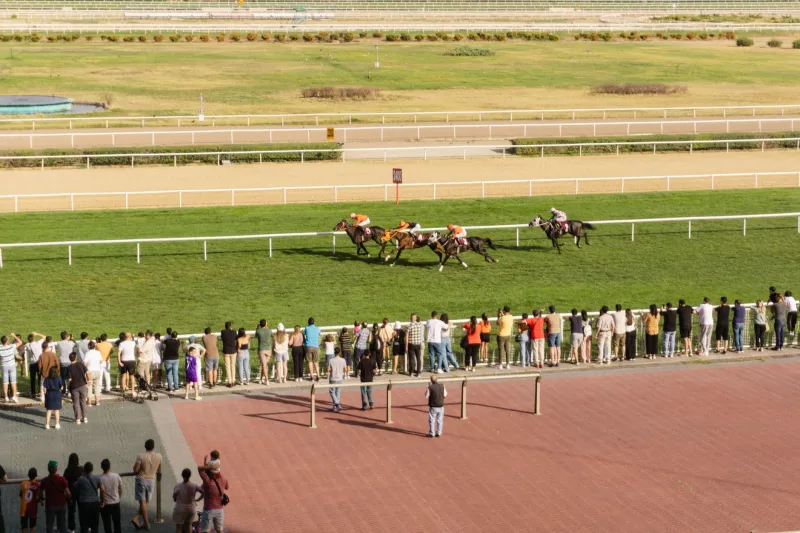
Every Aussie punter has a story. It usually starts with something like, "I don't normally do this, but it's the Cup…" or "It's the Grand Final, mate — you have to have a bet." And that's exactly the problem.
Australia's sporting calendar is extraordinary. It's also, for anyone serious about their betting, a twelve-month obstacle course. Certain events don't just attract attention — they fundamentally alter how punters think, how much they're willing to risk, and how clearly they can evaluate a market. If you've never mapped your worst betting months against the calendar, you might be surprised by what lines up.
The Melbourne Cup: Australia's Most Dangerous Betting Day
The first Tuesday in November is, by almost every measure, the most emotionally compromised betting day on the Australian calendar. It's not just a race — it's a cultural event. Office sweeps, fashions on the field, champagne at 10am. The entire social context is designed to loosen inhibitions and encourage participation from people who wouldn't normally go near a TAB.
That's precisely why it's so dangerous. The Cup draws in casual punters by the millions, and even experienced bettors get swept up in the atmosphere. Bet sizes spike dramatically in the week leading up to the race. People who normally apply careful form analysis throw money at "a horse with a good name" or "the one the bloke at the pub tipped."
The data tells a consistent story: average bet values during Cup week are significantly higher than any other race week, and the proportion of bets placed on sentiment rather than analysis climbs sharply. The field is large, the variables are many, and yet confidence — irrational, social-pressure-driven confidence — reaches its annual peak.
AFL Grand Final Week: When Tribal Identity Overrides Logic
September brings its own version of the problem. AFL Grand Final week in Melbourne is less about casual participation and more about tribal loyalty overriding rational assessment. Punters who follow their club closely — who know the players, watch every game, and feel every loss personally — are paradoxically some of the worst-equipped people to bet on their own team.
Emotional investment creates blind spots. You minimise injuries to your side and amplify them in the opposition. You remember the wins more vividly than the losses. You genuinely believe, on some level, that wanting it more matters.
What makes Grand Final week particularly tricky is that the social environment amplifies this. Everyone around you is betting, talking about the game, and reinforcing the narrative that makes backing your team feel inevitable. Accountability to logic drops. Accountability to your mates — and to the story you've been telling all season — goes up.
Summer Cricket: The Slow Bleed of a Long Series
The summer Test cricket season operates differently. Rather than a single high-pressure event, it's a slow-burn across months, which creates its own category of problematic betting behaviour: the chase.
Test cricket punters often start the season with reasonable discipline. But across a five-Test series, losses accumulate, narratives shift, and the temptation to "get it back" before the series ends becomes overwhelming. The Boxing Day Test and New Year's Test are particular flashpoints — high-profile fixtures where national pride and accumulated frustration collide.
The length of the season also breeds overconfidence. By mid-January, many punters believe they've "figured out" the conditions, the teams, or the pitch behaviour. That familiarity is often illusory, but it leads to bigger bets placed with less rigour.
Boxing Day Racing: The Holiday Brain Problem
Boxing Day sits at a uniquely vulnerable point in the calendar. Punters are on holiday, often relaxed and well-fed, surrounded by family, and have just come off Christmas. The psychological state is one of celebration and looseness — the opposite of disciplined analysis.
The Flemington and Randwick cards on Boxing Day are genuinely excellent racing, but they're consumed by an audience whose guard is completely down. Bet sizes on Boxing Day are inflated relative to the quality of analysis going into them. It's not that the races are harder to read — it's that the people reading them are operating with impaired focus and elevated mood, both of which correlate with risk-taking.
February and the Post-Summer Lull
Interestingly, February tends to be one of the more rational months for Australian punters. The Cup is months away, the cricket is winding down, and the AFL and NRL seasons haven't yet ignited tribal passions. Bet sizes are lower, and the punters who remain active tend to be more serious and methodical.
If you're looking for a time to review your strategy, reset your bankroll approach, and bet with clearer eyes, February is genuinely underrated.
What You Can Actually Do About It
Knowing which events prime you for bad decisions is only useful if you act on that knowledge. A few practical approaches:
Set calendar-based limits. Before Cup week or Grand Final week, decide in advance what your maximum outlay will be — and set it lower than you think you need to. The environment will pressure you upward; your pre-commitment needs to anchor you.
Separate social bets from serious bets. There's nothing wrong with having a flutter on the Cup as a social activity. The mistake is treating social bets with the same analysis (or lack of it) as your regular punting. Keep them in separate mental — and ideally financial — buckets.
Track your results by month. If you haven't done this, start now. Most punters are shocked to discover how heavily their annual losses cluster around two or three events. That data is genuinely useful.
Wait 24 hours after a big event. The emotional residue from a major sporting occasion can linger. Placing bets in the 24 hours after a high-intensity event — especially if you lost — is statistically one of the riskier things you can do.
Australia's sporting calendar is one of the best in the world. It's also, if you're not careful, a twelve-month map of where your bankroll went. The punters who navigate it well aren't necessarily smarter — they're just honest about when the calendar is working against them.